

Refusing Battle: The Alternative to Persistent Warfare
It is long past time to end America's forever wars.

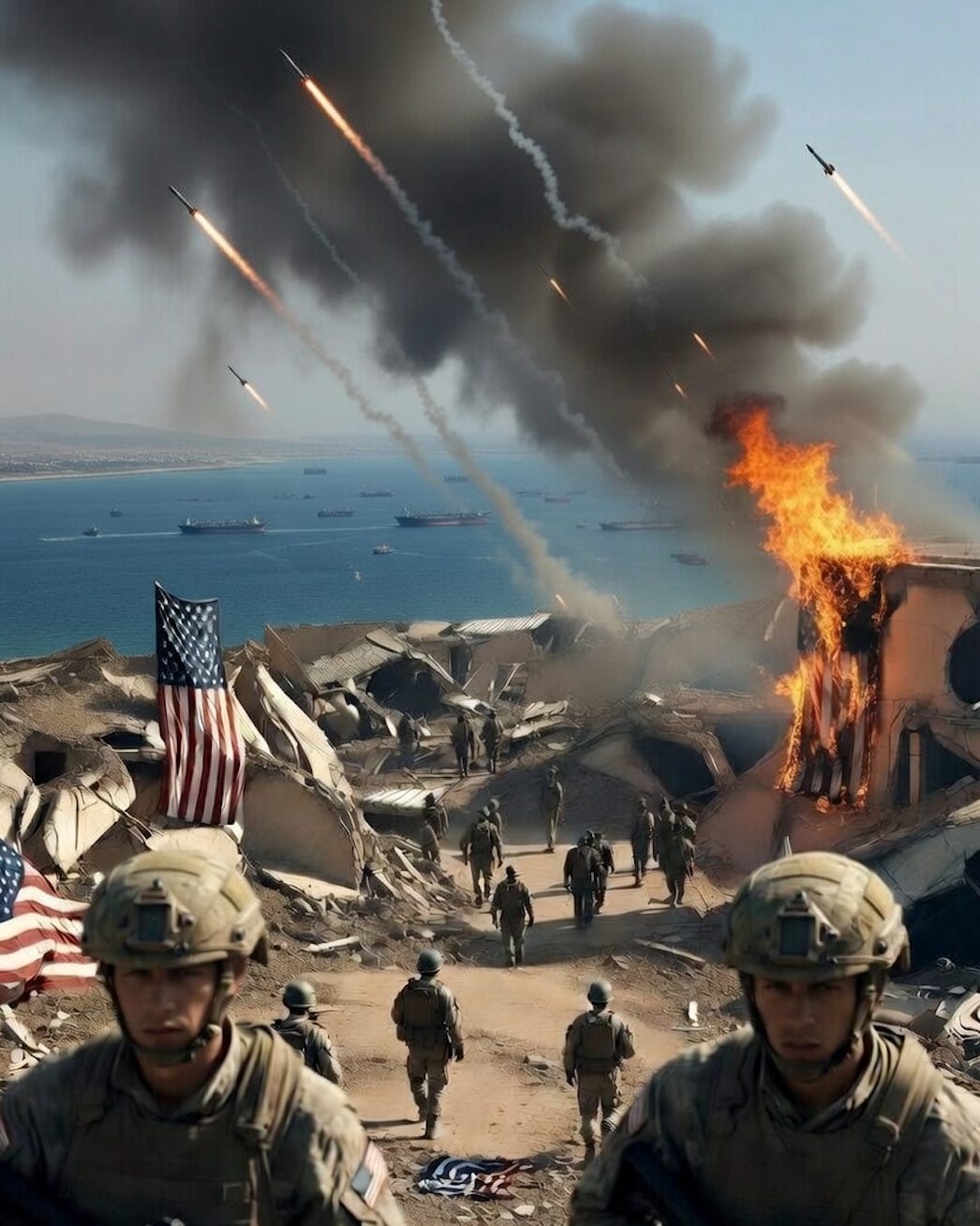
Republished from Armed Forces Journal, (April, 2009)
“Sir, I am deeply concerned about Iraq. The task you have given me is becoming really impossible ... if they (Sunni and Shiite) are not prepared to urge us to stay and to cooperate in every manner I would actually clear out. ... At present we are paying eight millions a year for the privilege of living on an ungrateful volcano out of which we are in no circumstances to get anything worth having.”
Winston Churchill to British Prime Minister David Lloyd George, Sept. 1, 1922
Despite the seriousness of the present economic crisis, the greatest danger to the future security of the U.S. is Washington’s inclination to impose political solutions with the use of American military power in many parts of the world where Washington’s solutions are unneeded and unsustainable.
President Barack Obama must arrest this tendency by making pragmatic and methodical changes to the goals of American military strategy. The Bush legacy in foreign and defense policy presents Obama with a stark choice:
Will we continue to pursue global hegemony with the use of military power to control and shape development inside other societies?
Or
Will we use military power to maintain our market-oriented English-speaking republic, a republic that upholds the rule of law, respects the cultures and traditions of people different from ourselves, and trades freely with all nations, but protects its sovereignty, its commerce, its vital strategic interests and its citizens?
This essay argues for the latter approach; a strategy of conflict avoidance designed to make the U.S. more secure without making the rest of the world less so.
For Americans who’ve lived in a world with only one true military, political and economic center of gravity — the U.S. — changing how America behaves inside the international system is not an easy task.
Since 1991, Americans have become so accustomed to the frequent use of American military power against very weak opponents they seem to have lost their fear of even the smallest conflict’s unintended consequences. But the 21st century is no time for the leaders of the U.S. to make uninformed decisions regarding the use of force or to engage in desperate, end-game, roll-of-the-dice gambles.
Recent events in the Caucasus involving Russia and Georgia may simply be a foretaste of what is likely to happen during the 21st century in much of Asia, Africa and Latin America, where the ancient practice of encouraging one ethnic group to dominate others as a means of securing foreign imperial power is breeding new conflicts. These conflicts are likely to resemble the Balkan Wars of the early 20th century, except that fights for regional power and influence will overlap with the competition for energy, water, food, mineral resources and the wealth they create.
Direct American military involvement in conflicts where the U.S. itself is not attacked and its national prosperity is not at risk should be avoided.
In nations such as Iran and Turkey, states with proud histories, huge populations under the age of 30 and appetites for more prominence in world affairs, the influx of wealth from the energy sector will also support much more potent militaries and, potentially, more aggressive foreign policies, too. In this volatile setting, direct US military involvement in conflicts where the America itself is not attacked and its national prosperity is not at risk should be avoided.
American military involvement could cause regional alliances designed to contain US military power; alliances that would not normally exist.
Otherwise, American military involvement could cause 21st century conflicts to spin out-of-control and confront Americans with regional alliances designed to contain US military power; alliances that but for American military intervention would not exist. It is vital the U.S. not repeat the mistakes of the British Empire in 1914:
Overestimate National Power by involving itself in a self-defeating regional war it does not need to fight and precipitate its own economic and military decline
Avoiding this Outcome demands new goals for US military power and a strategic framework that routinely answers the questions of purpose, method and end-state
National Strategy in which US military action is short, sharp, decisive and rare. Such a strategy involves knowing when to fight and when to refuse battle.
LEE’S CHOICE On June 24, 1863, the Confederate Army of Northern Virginia — 74,000 strong — completed its crossing of the Potomac River and pushed northward into Pennsylvania toward Gettysburg. Six days later, when Robert E. Lee, the Confederate commander, arrived in front of Gettysburg, he discovered to his dismay that a much larger and better equipped Union Army — 115,000 strong — confronted him in strong defenses on the high ground above the town.
As an officer of engineers, Lee knew what this development meant for his army; his troops would have to attack uphill while the Union troops poured rifle and artillery fire into them. Fortunately for Lee his opponent opted to immobilize itself in defensive positions. The Army of Northern Virginia was not yet decisively engaged. Lee still had options.
Lee could move his army away from Gettysburg, placing it between the Union Army and Washington, D.C., an action likely to draw the Union Army out of its strong defensive positions to attack and eliminate the danger Lee presented to Washington. Such a fight would occur on terms more favorable to Lee, increasing the likelihood of yet another Southern victory.
A major Confederate victory on Northern territory would almost certainly have resulted in Lee’s occupation of Washington, D.C., and maybe even Southern independence. Flush with their victory at Chancellorsville seven weeks earlier, Lee and his troops were spoiling for a fight, and they got the one they did not want or expect. After repeated charges and the loss of thousands of men, Lee retreated southward over the Potomac River without interference from the Union Army, but Lee lost a battle that cost the Confederacy the war.
Lee should have refused battle. Had he done so, he would have kept his army and its capabilities intact until he could achieve a position of advantage and with it more favorable conditions for the employment of his force.
